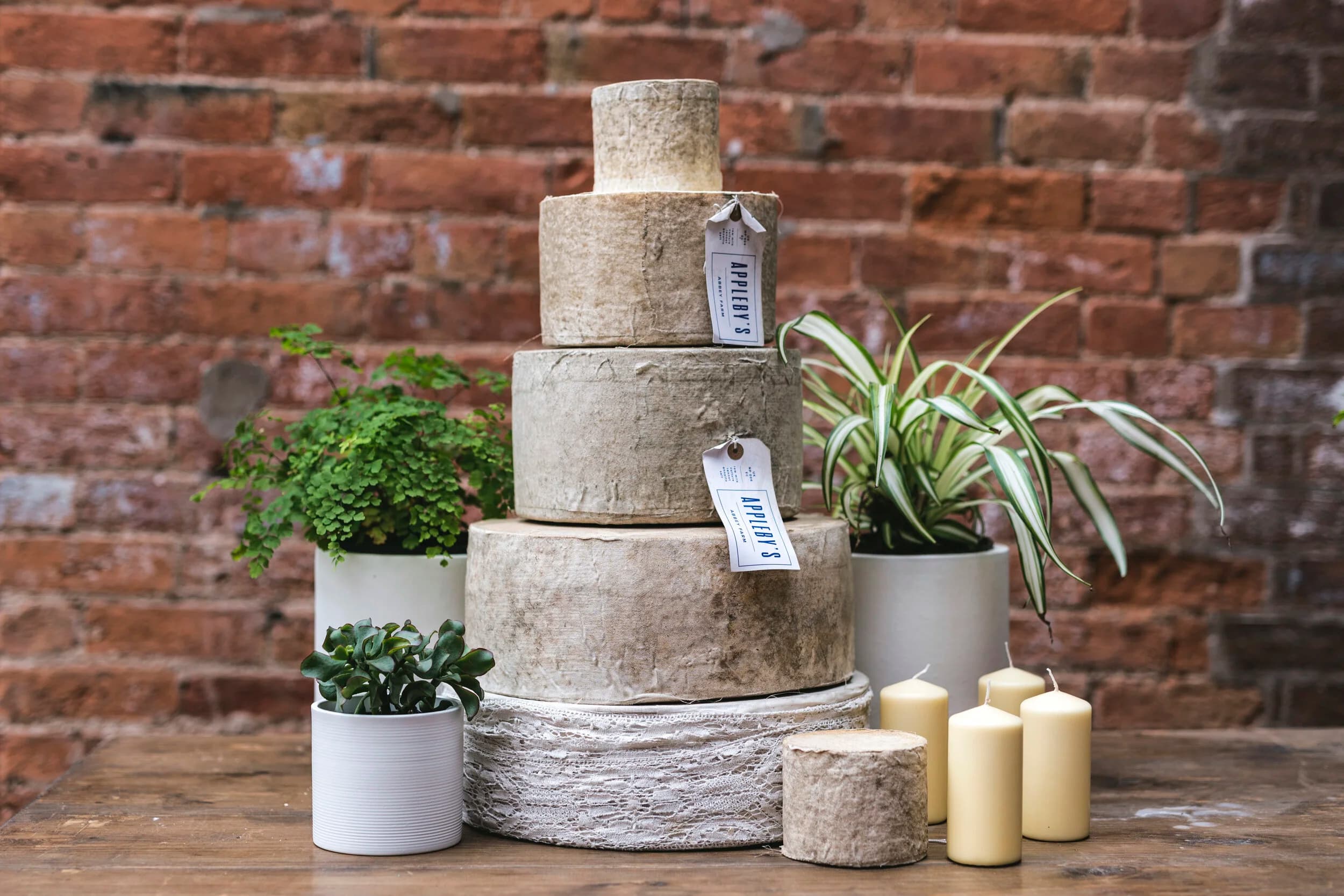
Appleby's Cheshire Review: The World's Only Raw-Milk Clothbound Cheshire
Cheshire is generally reckoned to be England's oldest named cheese — older than cheddar as a recorded regional style, mentioned in historical records long before most of the food on this site's directory existed at all. Today, there is exactly one maker left producing it the traditional way: raw milk, clothbound, matured slowly. That is Appleby's, a family business founded in 1952, based in Whitchurch, Shropshire.
The Story
Cheshire cheese's claim to being England's oldest named cheese isn't a marketing flourish — it's a genuinely old regional identity, with references to cheese from the county appearing in historical records that predate any documented mention of cheddar as a distinct regional style. For centuries, Cheshire's particular geology — salt-rich pastures from the same underground deposits that made towns like Nantwich and Northwich centres of the salt trade — gave the local milk, and therefore the cheese made from it, a distinctive character that became recognised well beyond the county itself.
Appleby's, as a business, is comparatively young by the standards of some of the other firms in this directory — founded in 1952, well within living memory for many people alive today. But the tradition it preserves is vastly older than the company itself, and that's an important distinction: Appleby's isn't the origin of traditional Cheshire cheesemaking, it's the last link in a chain that stretches back centuries, and the company's own founding in the mid-twentieth century happened at almost exactly the moment industrial dairy production was beginning to displace the older regional practice everywhere else.
What Makes It Different
Like the best of Britain's surviving cheesemakers, Appleby's Cheshire is defined by what it refuses to compromise on. It is made from unpasteurised milk, which preserves the natural bacterial complexity that gives farmhouse cheese its depth, and it is clothbound — wrapped in cloth rather than sealed in plastic — which allows the cheese to breathe and develop a natural rind as it matures. That combination once described most Cheshire cheese in Britain. Today it describes only Appleby's.
Even more distinctive is where the cheese matures: in barns dating back to the Napoleonic era, structures that were already standing when Cheshire cheese was a nationally recognised staple, long before industrial dairy production existed at all. The temperature, airflow, and microbial environment of a 200-year-old barn cannot be replicated in a modern climate-controlled maturing room — it's a genuinely unrepeatable variable in the cheese's flavour, tied to a specific physical building rather than a specification.
That last point is worth dwelling on, because it's easy to underestimate how much a maturing environment actually shapes the final product. Over two centuries, a stone or timber barn develops its own resident population of moulds and bacteria embedded in the fabric of the building itself — in the walls, the beams, the floor. That resident microbial population interacts with each wheel of cheese as it matures, in ways a newly built, sterile, climate-controlled facility simply cannot reproduce, no matter how precisely the temperature and humidity are engineered. A modern facility can control the numbers on a dial. It cannot replicate two hundred years of accumulated microbial history baked into a building's timber.
Why Being the "Only One Left" Matters Here
Cheshire's decline as a traditional cheese mirrors Lancashire's: an entire regional cheesemaking identity, once made by dozens of farms across a county, reduced by pasteurisation, industrial standardisation, and the economics of modern dairy farming down to a single remaining traditional producer. When people talk about "Cheshire cheese" today, most are talking about a pasteurised, block-matured product with only a geographic name in common with what Appleby's still makes.
That makes Appleby's not just a good cheesemaker, but the last documented link to what England's oldest named cheese actually tasted like before industrialisation flattened the category. If Appleby's stopped, "traditional Cheshire" wouldn't just decline — it would functionally cease to exist as a real, currently-produced thing, rather than a name attached to a modern imitation.
It's a genuinely strange position for the oldest named cheese in England to be in. Cheddar, despite being a younger regional tradition, has multiple surviving traditional producers — Barber's and Montgomery's both profiled elsewhere in this collection. Cheshire, despite its older pedigree, has come down to one. There's no clear historical reason why one tradition kept several traditional producers while the other kept only one; it's simply how the economics and family decisions played out differently in each county over the twentieth century.
What You're Really Buying
A block of Appleby's costs meaningfully more than a supermarket "Cheshire," and what separates the two isn't marketing — it's raw milk versus pasteurised, cloth versus plastic, and a 200-year-old barn versus a modern maturing facility. You are buying the only surviving example of how England's oldest cheese was actually made, at a moment when it would have been entirely possible for that method to have quietly ended, unremarked, decades ago, the way it did in every other Cheshire-producing farm and dairy across the county.
You're also, in effect, buying the difference between a cheese with a documented thousand-year regional identity and a cheese that merely borrows that identity's name. Once you've tasted the two side by side, the gap is not subtle — traditional Cheshire has a tangy, slightly citrus-like sharpness and a crumbly, moist texture that the mild, uniform industrial version simply doesn't carry, because it was never made to carry it in the first place.
Pros:
- The sole surviving maker of raw-milk, clothbound Cheshire — genuinely irreplaceable.
- Matured in Napoleonic-era barns, an unrepeatable physical environment tied to the cheese's specific flavour.
- Keeps alive the traditional form of England's oldest named cheese.
Cons:
- Meaningfully pricier than industrial "Cheshire" cheese sold under the same name.
- As the only traditional producer, availability is more limited than mainstream supermarket Cheshire.
The Industrial "Cheshire" Problem
As with Lancashire and cheddar, "Cheshire" is not a legally protected name. Any manufacturer, anywhere, can produce a pasteurised, block-matured cheese and sell it as Cheshire, regardless of whether it uses raw milk, whether it's clothbound, or whether it has any connection to the county at all. The vast majority of "Cheshire cheese" sold in British supermarkets falls into this category — a mild, crumbly white cheese bearing only a passing resemblance to the tangy, more complex product Appleby's still makes.
This creates a particular kind of quiet erosion. Most shoppers who buy "Cheshire cheese" from a supermarket have simply never tasted the traditional version, and have no reason to suspect what they're eating is a different product carrying the same historic name. Over enough decades, the industrial version effectively becomes what "Cheshire cheese" means to most people, while the tradition it displaced survives, if at all, only through a single remaining maker most shoppers have never heard of.
Buying It Properly
Appleby's Cheshire is available through specialist cheesemongers, farm shops, and direct order, though it's less commonly found on general supermarket shelves than the industrial version carrying the same name. It's worth seeking out specifically by producer name rather than simply asking for "Cheshire cheese," given how little the generic label now guarantees. Serve it as you would any strong, crumbly farmhouse cheese — on its own with good bread, or alongside fruit, rather than melted or cooked, where its more delicate traditional character is easily lost.
The Verdict
Appleby's is what's left of England's oldest cheese once you strip away every industrial shortcut taken by everyone else who used to make it. Raw milk, cloth, and 200-year-old barns aren't heritage decoration here — they're the entire reason this is still recognisably Cheshire cheese rather than a plastic-wrapped imitation carrying the name.
For the fuller argument on protecting producers like this, read British Real Food Heritage.
Related: Kirkham's Lancashire Cheese Review | Montgomery's Cheddar Review